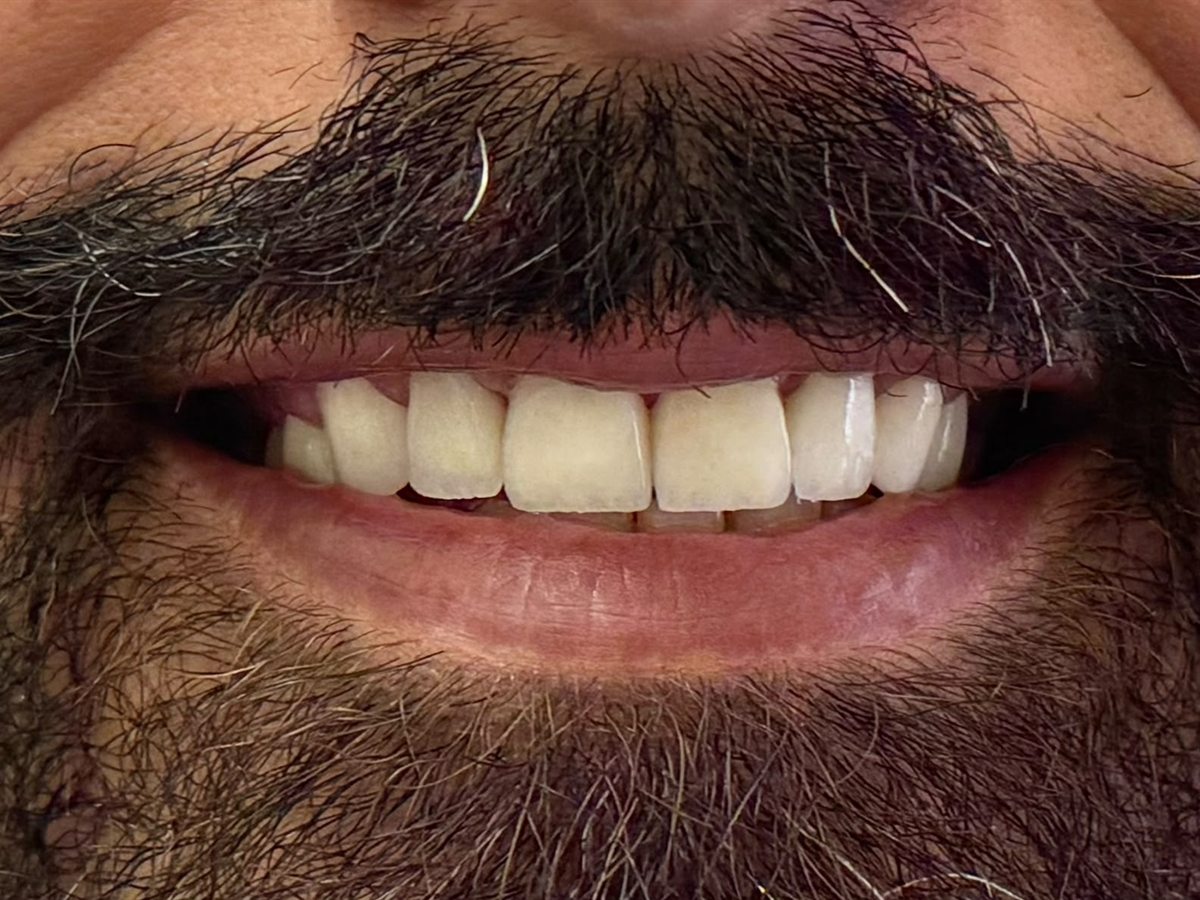
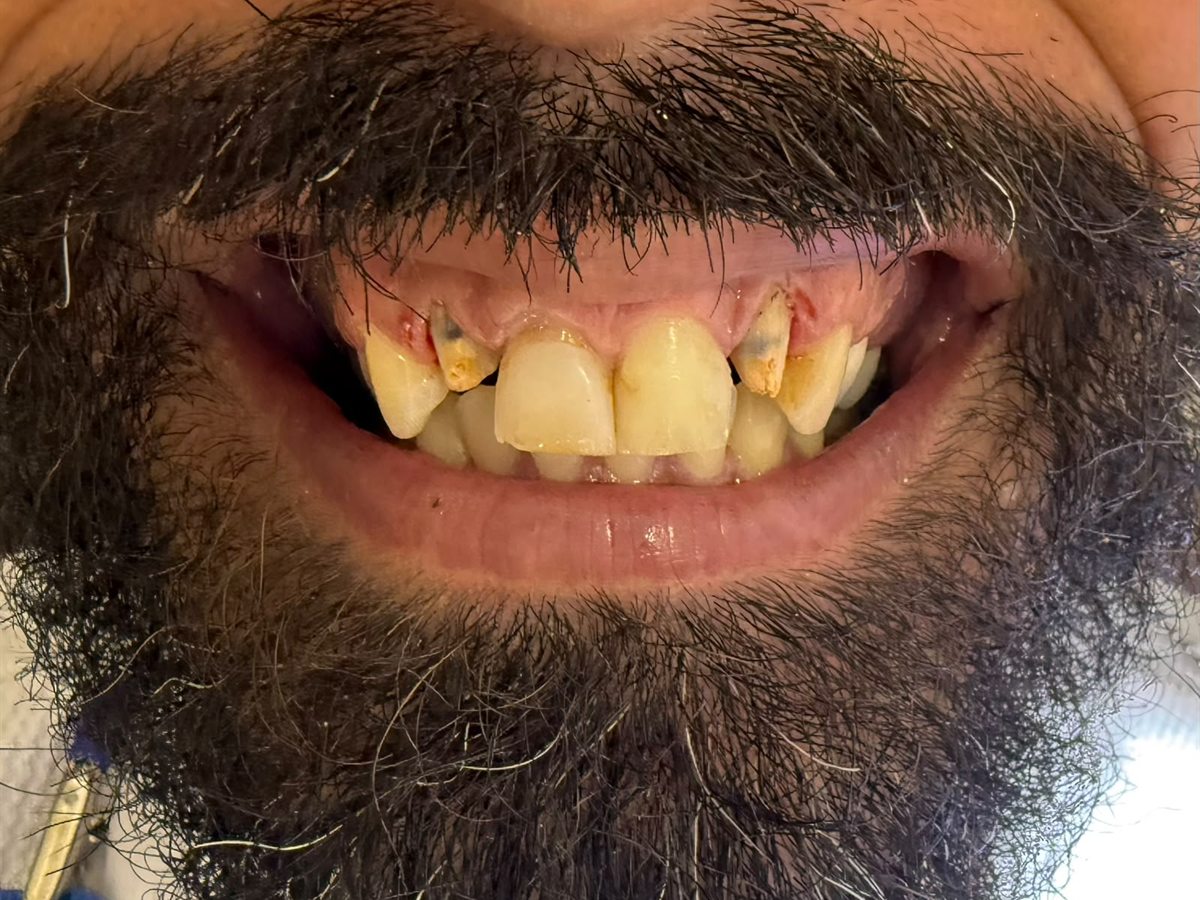
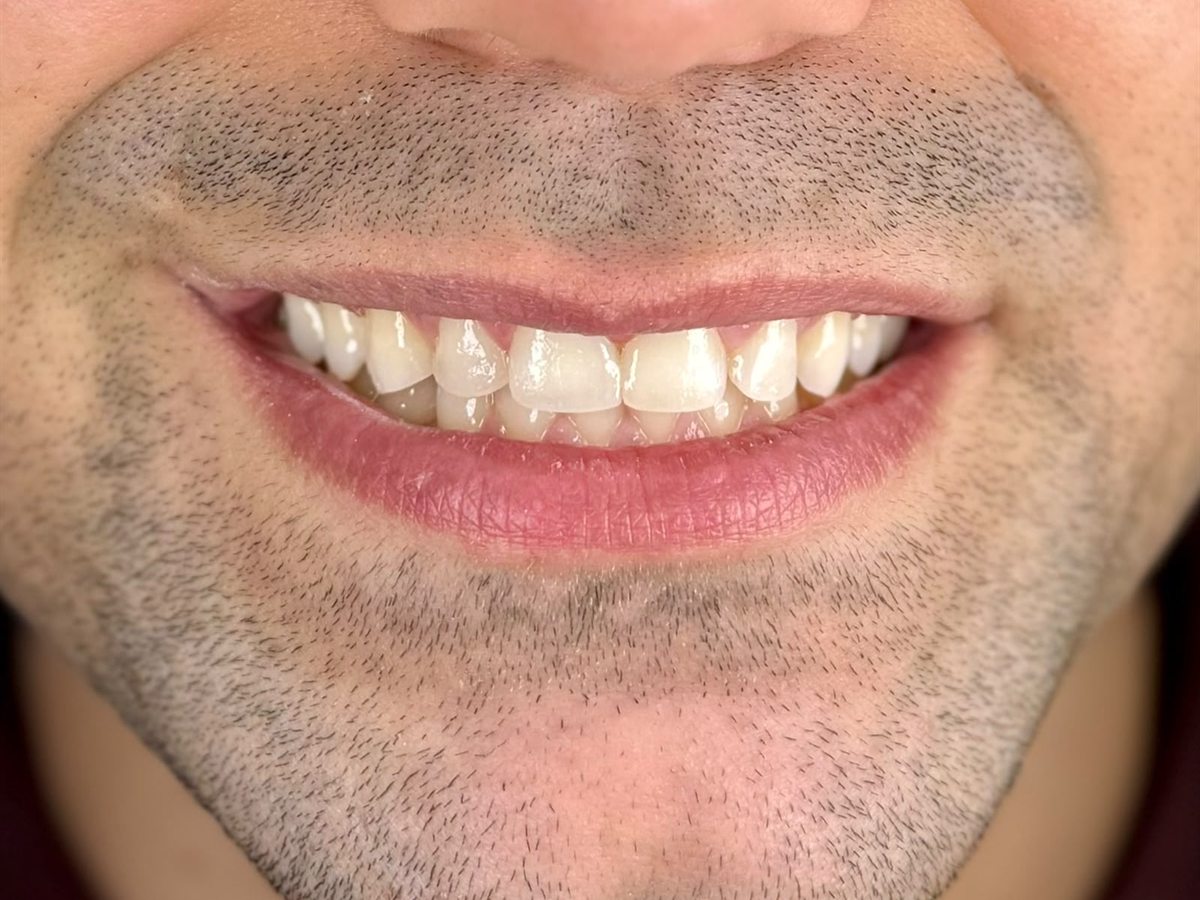
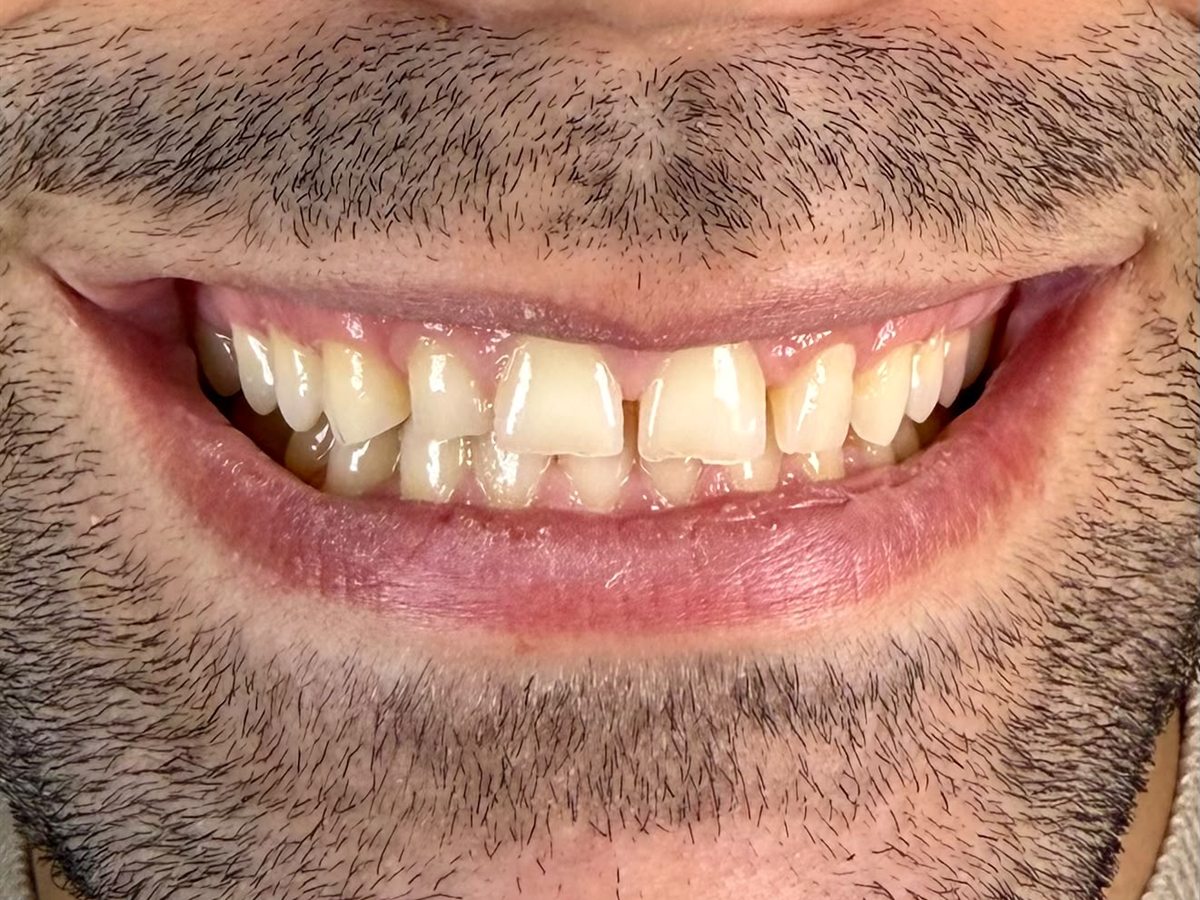
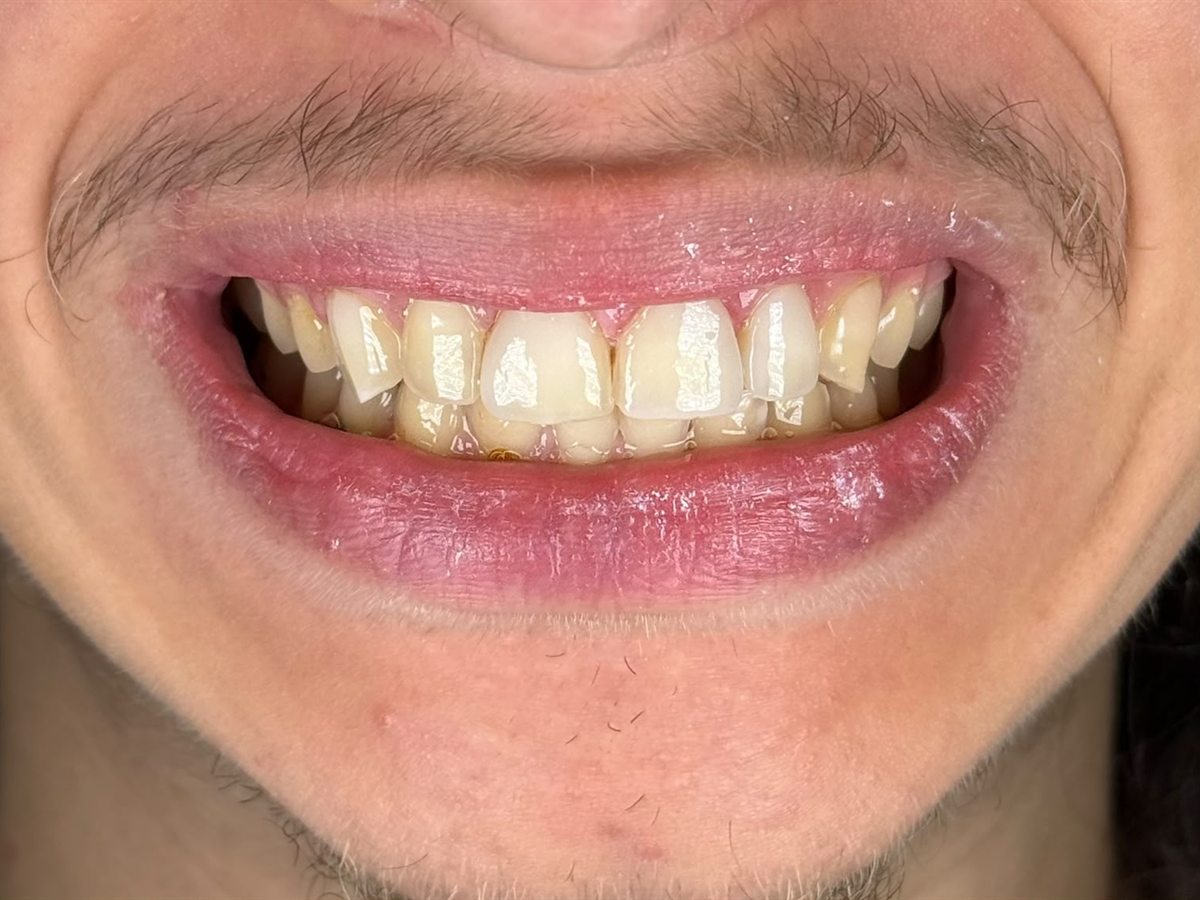
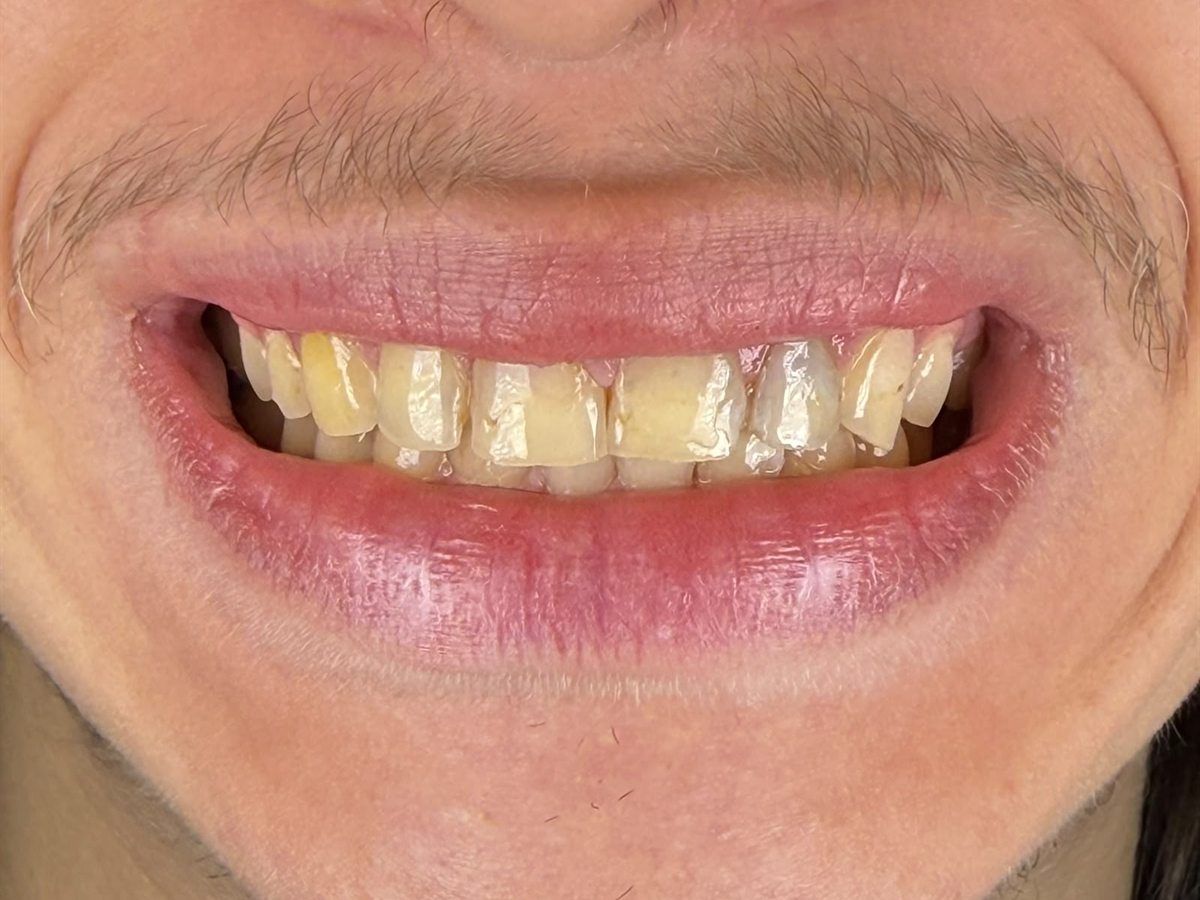
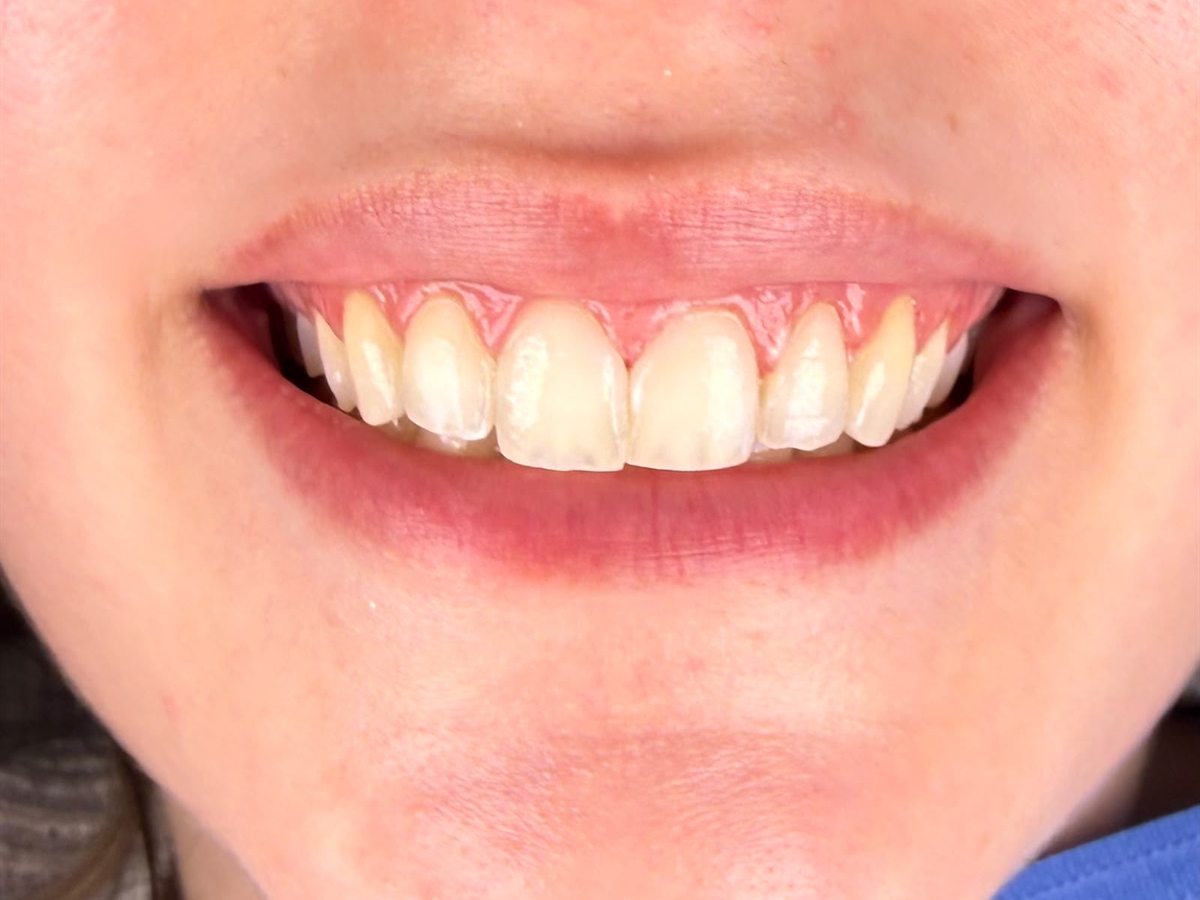
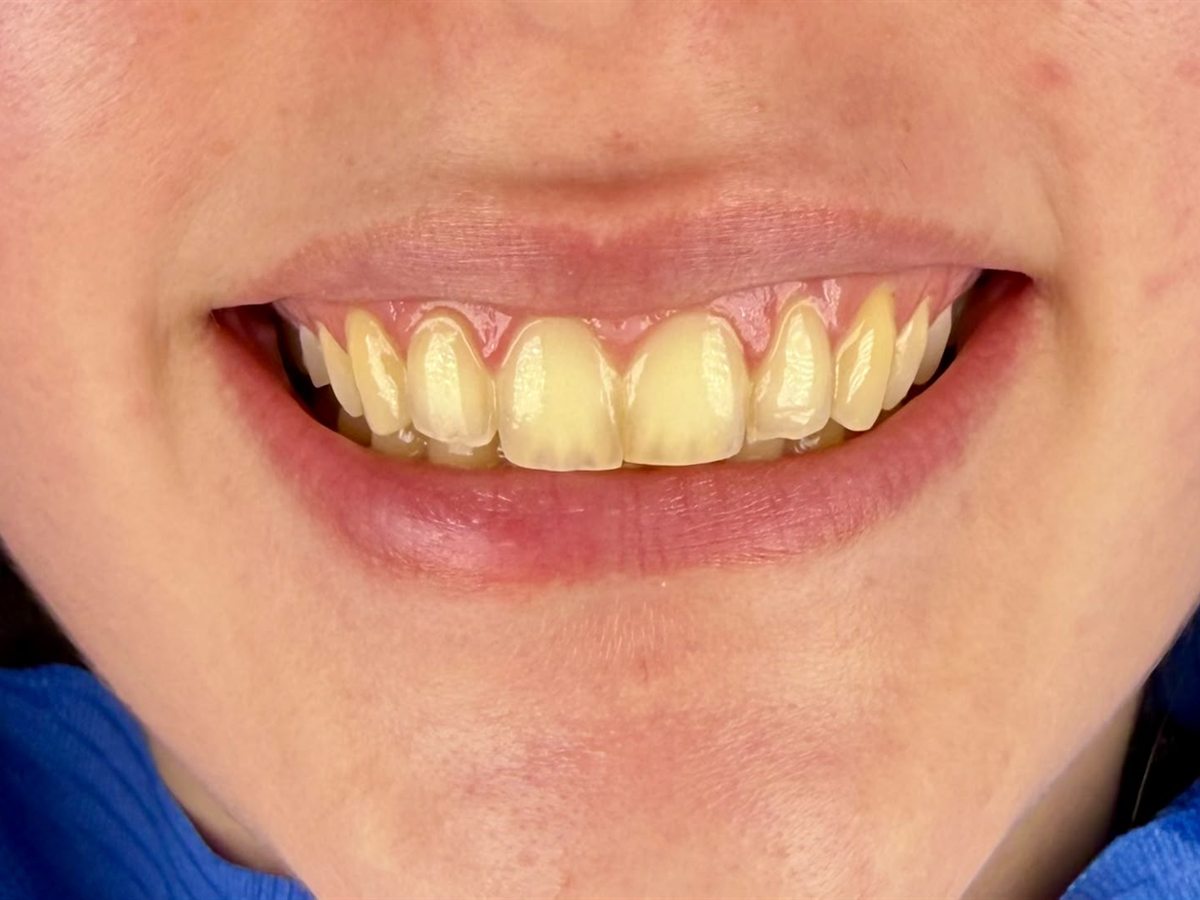
All photographs are of patients treated at this clinic and are published with their consent.
Individual results vary.
How to read a before-and-after photo
Judge the gum line first — healthy pink margins mean the work respects the
tissue. Look at edge shape: natural teeth have soft, slightly uneven
edges, not a ruler line. Check translucency at the tips; opaque white
blocks are a sign of over-thick ceramic. And ask what you can't see: how many
visits, which material, whether a night guard was made, and whether the photographs were
taken under the same light. Ours are, and we will tell you the rest at your consultation.
Which treatment does what
Veneers change edges, shape and colour of otherwise healthy
front teeth; a Hollywood smile does it across the
whole visible arch. Crowns rebuild teeth that have lost too much structure.
Implants replace missing teeth. Whitening
changes shade only, and works on natural enamel, not on old fillings or ceramic — which is
why it comes before any veneer work, never after.
The mock-up: seeing your “after” before you commit
Every case above went through the same step, and it is the one worth understanding
before you choose any clinic. Before a single tooth is touched, the new shape is
designed on a model of your mouth and then transferred onto your own teeth as a thin
temporary layer. You sit up, look in a mirror in daylight, talk, smile, and go home
with it if you want to.
What this does is move the decision to the only point where changing your mind is free.
Patients ask for edges to be shortened, for less white, for a little more character
left in. Some decide four teeth will do rather than eight. A few look at it and decide
they liked their own teeth after all, which is a perfectly good outcome and costs them
nothing but the examination. Nothing is sent to the laboratory until you have approved
what you are looking at.
A clinic that cannot show you the result before making it is asking you to buy a
photograph of somebody else’s mouth. That is the real reason this page exists:
not to promise you these results, but to show you the standard of planning behind them.
Before-and-after photos that should make you cautious
You are going to look at a lot of these while choosing a dentist in Beirut, so it is
worth knowing how the flattering ones are made. None of what follows is illegal or even
unusual. It is simply the difference between a photograph that documents dentistry and
a photograph that sells it.
- The lighting changed. A dim, yellow “before” and a
bright, flash-lit “after” will make identical teeth look two shades apart.
Both of ours are shot under the same light, at the same settings.
- The lips are held differently. A relaxed, half-closed
“before” against a fully retracted “after” exposes more tooth
and hides the gum line, which is exactly where poor work shows first.
- Dry versus wet. Teeth photographed dry after several minutes of
isolation look brighter and more opaque than the same teeth wet. It is a real effect
and it fades within minutes of the patient leaving.
- The gums are cropped out. If the “after” is tightly
framed on the teeth alone, ask to see the gum margins. Inflamed, receding or unevenly
contoured gums are the usual reason for the crop.
- The photograph is taken the same day. A result photographed at the
fitting appointment has not yet been tested by a bite, a year, or a cup of coffee. Ask
how long after fitting the picture was taken.
- No cases that look like yours. A gallery that is entirely white
upper arches tells you what the clinic likes photographing, not what it treats.
Our photographs are taken with the same camera, the same lighting and the same retractor
position on both visits, and they are not retouched. Where a result is imperfect —
and some are — the note underneath says so.
What a photograph cannot show you
This is the honest limit of any case gallery, ours included. A picture is a single
moment, and dentistry is judged over years. It cannot show you:
- How the bite feels. The most important part of a rebuilt smile is
whether it works when the patient chews, and that is invisible in a photograph.
- How long it lasted. Porcelain veneers typically last 10–15
years and composite 4–7, but the case above was photographed in its first weeks.
Ask any clinic to show you a case at five years, not five days.
- What was underneath. Decay treated first, a root canal done
properly, gum disease stabilised — none of it appears in the frame, and all of it
determines whether the result survives.
- Whether the cause was addressed. Rebuilding teeth worn down by
grinding without making a night guard is rebuilding them so they can be worn down
again.
When a case is not suitable for this kind of work
We turn down or postpone cosmetic work reasonably often, and it is fairer to say so here
than at the chair. Active gum disease has to be treated and stable before anything is
bonded to a tooth — ceramic on an inflamed foundation fails, and it fails
visibly. Untreated decay comes first for the same reason. Heavy grinding is not a bar,
but it changes the plan and it makes a night guard non-negotiable. Teeth still moving in
a teenager are usually a reason to wait.
And sometimes the honest answer is that the result you have in mind is not available
from the treatment you have in mind. Whitening
will not fix tetracycline banding. Veneers will not
correct a significant bite problem that
orthodontics should handle first. We would rather
tell you at the examination, for $20, than after you have paid for an arch of ceramic.